January Climately
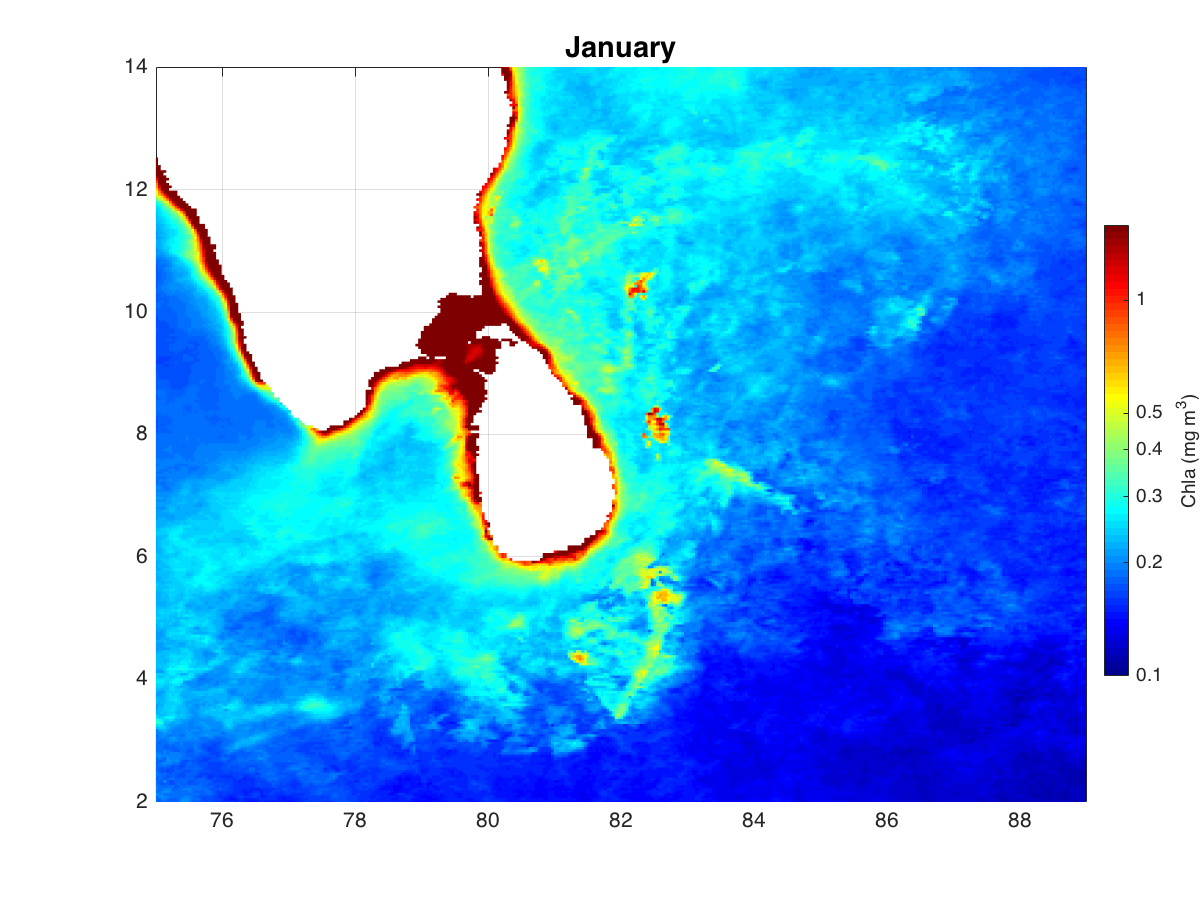
Satellite-based ocean color observations provide a global picture of life in the world's oceans. Satellite sensors can "see" the effects of this upwelling-related productivity because the chlorophyll-bearing phytoplankton reflect predominantly green light back into space as opposed to the water itself which reflects predominantly blue wavelengths back to space. The Moderate Resolution Imaging Spectrometer (MODIS) instrument currently provides ocean color data during July 2002 to September 2016. By recording images over a period of years, scientists also gained a better understanding of how the phytoplankton biomass changed over time; for instance, phytoplankton blooms could be observed when they grew. Ocean color measurements are also of interest because phytoplankton removes carbon dioxide from the sea water during photosynthesis, and so forms an important part of the global carbon cycle.
附件下载: